

Tehran Invokes History of U.S. Military Failure After Trump’s ‘Crazy Bastards’ Ultimatum
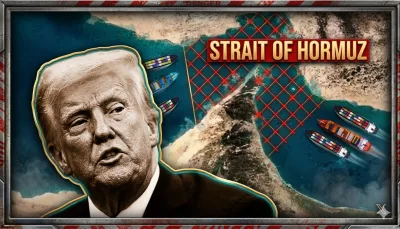
The rhetorical war between Washington and Tehran has reached a fever pitch following an expletive-laden threat from U.S. President Donald Trump. In a series of provocative posts, Trump warned of a massive kinetic strike against Iranian infrastructure if the strategic Strait of Hormuz remains closed. Iran, in a calculated diplomatic counter-move, responded by reminding the White House of its most humiliating military setback in the region: Operation Eagle Claw.
The ‘Power Plant Day’ Threat
The escalation began on Truth Social, where President Trump hailed what he described as a "miraculous" search and rescue operation to extract a downed U.S. fighter pilot from Iranian territory. While celebrating the tactical success, the President quickly pivoted to a blunt ultimatum. He warned that if Iran does not immediately cease its blockade of the Strait of Hormuz—the world’s most important oil transit chokepoint—the U.S. military would begin systematically destroying civilian and dual-use infrastructure.
"Tuesday will be Power Plant Day, and Bridge Day, all wrapped up in one, in Iran," Trump posted. He punctuated the threat by calling Iranian leadership "crazy bastards" and warning they would soon be "living in Hell."
Tehran’s Historical Retort
Iranian embassies and military officials were quick to push back, not only on the threats but on the U.S. version of the pilot’s rescue. The Iranian Embassy in London posted a stark reminder of April 24, 1980, when a U.S. mission to rescue hostages in Tehran ended in a catastrophic collision and fire in the Tabas Desert, leaving eight American service members dead and several aircraft destroyed.
"History repeats itself," the post read, accompanied by archival images of the 1980 wreckage alongside new footage of charred debris from the recent extraction mission. While U.S. media confirmed the pilot was retrieved, they acknowledged that American forces were forced to scuttle at least two aircraft on the ground to prevent sensitive technology from falling into Iranian hands. Iran’s Khatam Al-Anbiya Central Headquarters claimed the "so-called rescue" resulted in the destruction of four U.S. aircraft, characterizing the mission as a "total failure."
Regional Fallout and the Strait of Hormuz
The conflict centers on the Strait of Hormuz, where Iran has significantly restricted shipping traffic in response to ongoing regional strikes and economic sanctions. This blockade has sent ripples through global energy markets, as the waterway serves as a vital artery for liquefied natural gas and crude oil.
Beyond the sea, the conflict has expanded into a broader shadow war. Pro-Iran groups have reportedly targeted U.S. diplomatic sites in Iraq, while infrastructure in the UAE, Bahrain, and Kuwait has sustained damage from suspected Iranian strikes. Iranian Foreign Minister Abbas Araghchi added to the tension by warning that any U.S. or Israeli strikes on the Bushehr nuclear plant would not just harm Iran, but would result in radioactive fallout that would "end life" in the capitals of the Gulf Cooperation Council (GCC), which are geographically closer to the plant than Tehran itself.
A Surreal Calm in Tehran
Despite the looming threat of "Bridge Day" and the high-stakes military posturing, the atmosphere in the Iranian capital remains strangely detached from the digital vitriol. Reports from the ground describe residents going about their daily lives with a sense of practiced indifference. In Tehran’s public parks, young people were seen flying kites near the Milad Tower and playing frisbee to techno music, even as the international community braced for a potential kinetic escalation on Tuesday.
Whether the diplomatic backchannels currently open in Oman can de-escalate the situation before the President’s self-imposed deadline remains to be seen. For now, both nations remain locked in a cycle of historical grievances and modern military brinkmanship.